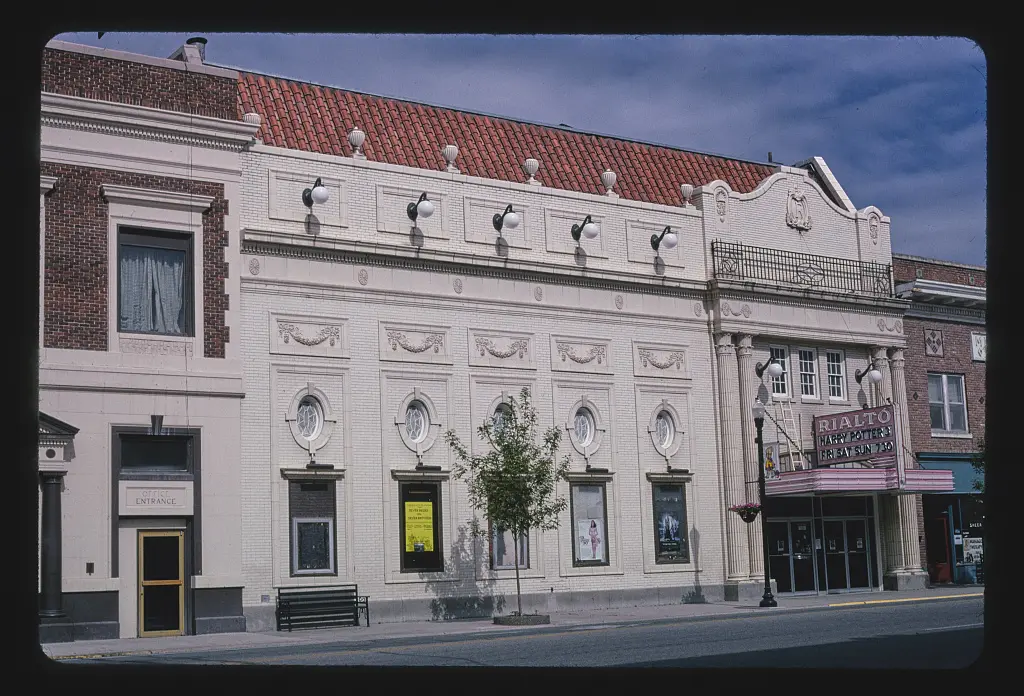
The Rialto's 2006 fire left an uneven inheritance. The auditorium, lobby, balcony, and restrooms were lost, but the terracotta facade, sidewalls, projection booth, stage area, and six original 1921 backdrops survived.[2] A familiar exterior and fragile pieces of performance history were saved while much of the audience's space disappeared.
Margolies photographed the Main Street theatre in 2004, two years before the fire.[1] The image records its outward identity before that interruption.
Stewardship had begun well before the emergency. A local organization formed in 1995 to purchase, operate, and restore the Rialto. Volunteers ran the venue, while grants and memorial contributions supported work on heating, electrical systems, restrooms, lighting, sound, and the marquee.[2]
Those improvements belong to the building's history as much as its ornament. Keeping a theatre useful requires boilers and wiring as well as a recognizable facade. The pre-fire work had already joined preservation to the practical demands of performance.
The fire occurred on November 4, 2006; the operator's history leaves its origin undetermined.[2] Its detailed account of what survived gives the event a meaning more precise than simply saying the theatre burned.
The saved backdrops are especially telling. A street facade preserves the venue's public address, while scenery carries traces of the world created for an audience inside. The Rialto held both forms of cultural memory.
Margolies's earlier photograph becomes one point of continuity among these surviving pieces. The theatre's history is a sequence of care, damage, and retention, with different parts carrying different meanings forward. What remained was not an untouched building, but enough of its fabric and theatrical life to keep the place recognizable.