An evening at the Rubidoux could begin with a miniature railroad, playground, petting zoo, or snack bar before the feature appeared.[2] The drive-in sold time at a destination as well as a seat—inside a car—in front of a screen.
Roy C. Hunt opened the theatre in November 1948. It began with one screen and space for approximately 690 cars, serving the communities around Riverside and Fontana.[2] Its capacity was measured in vehicles rather than individual chairs.
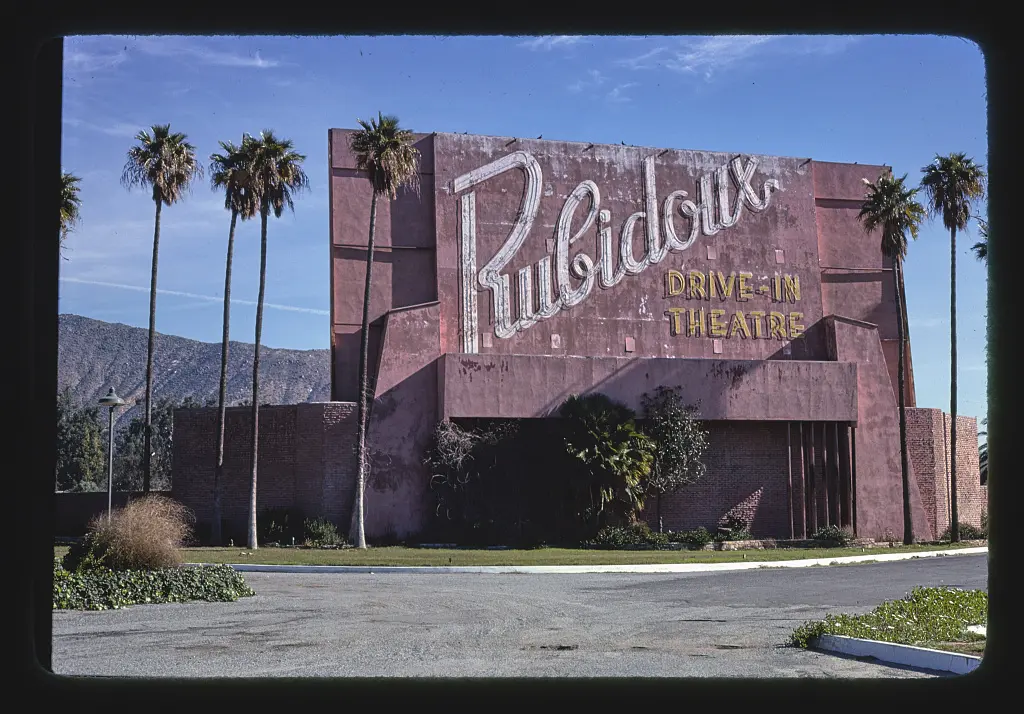
The original screen tower was adapted in the mid-1950s for CinemaScope, replacing proportions suited to the older Academy-format image.[2] A change in film presentation became a change in the roadside structure. Even someone passing in daylight could encounter the physical consequences of a wider movie frame.
Margolies photographed the Mission Boulevard drive-in in 1978.[1] Thirty years after its opening, the site already contained a history of adaptation rather than a single unaltered design.
The screen tower was the most conspicuous piece of a larger entertainment arrangement. Inside the grounds, the evening depended on parking, sight lines, sound, and things to do before the show. The railroad and petting zoo extended the visit beyond the projected feature, giving a family outing several attractions in one place.
The Rubidoux makes the drive-in's architecture inseparable from its programming. A new format reshaped the screen; pre-show activities shaped how visitors spent time on the property. The building type could respond to both technical change and the desire for a fuller evening out. In Margolies's archive, the roadside theatre is not just a large surface awaiting darkness, but the visible center of an evolving system of entertainment.