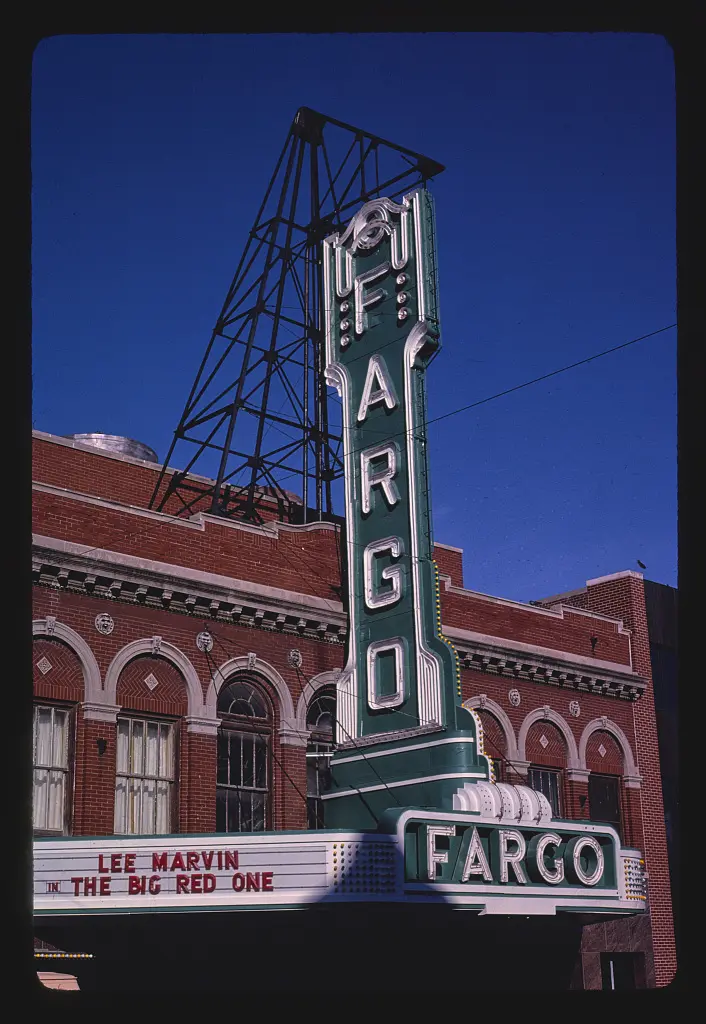
A theatre named for its city performs two kinds of introduction. It tells the customer where to see a show, and it presents the city's own name as something worthy of display. The Library of Congress identifies John Margolies's 1980 photograph as the Fargo Theatre in Fargo, North Dakota.[1] That correspondence between address and identity gives the subject a civic resonance beyond any particular film.
The theatre's institutional history dates the building to 1926 and describes its original purpose as both cinema and vaudeville house.[2] This combination matters. The room was made for more than one relationship between performer and audience: projected images could occupy it, but so could people appearing in person. The architecture housed an evening out rather than only one technology of entertainment.
Seen through that history, the theatre's street presence is a threshold between collective and individual experiences. A film may carry each viewer into a private imaginative world, yet the decision to attend brings strangers to one doorway at a scheduled time. A downtown cinema makes that gathering visible in the city. Its public identity persists between shows, holding the promise of the next event.
The official account records a second auditorium opening in spring 2009 to expand programming. It also identifies the organization as nonprofit and notes National Register recognition.[2] The second auditorium gave an established venue additional room for films and events.
The combination of preservation and additional capacity poses an interesting architectural question. What exactly must remain familiar for a theatre to retain its identity? A recognizable public face may carry decades of association even as the spaces behind it change. Conversely, an unchanged exterior is only part of the institution's continuity. A theatre needs a program and an audience to renew the meaning of its name.